Retail Store Asset Management Software: 30-Second AI Capture
Robotic ImagingMarch 26, 2026
Mobile Asset Documentation for Retail Store Operations
For store managers responsible for equipment that directly impacts daily operations, retail store asset management software delivers value only when integrated into existing store management routines — not added as a separate documentation task. Robotic Imaging's mobile asset documentation platform embeds store equipment tracking into daily store walks, enabling store managers to photograph equipment in 30 seconds per unit using native iOS and Android apps, with full offline capability for equipment rooms without WiFi, QR code work order submission from the equipment location, and store-level equipment visibility that rolls up to corporate operations dashboards.
The consequence of getting this wrong is predictable: documentation initiatives launch with corporate enthusiasm, stall within 60 days as store managers revert to known routines, and leave facilities teams making capital decisions from audit data that aged on arrival.
Asset Documentation as Store Operations Integration
The fundamental problem with most retail store asset management software is architectural, not functional. Platforms built for maintenance teams or facilities professionals require store managers to step outside their operating rhythm — log in to a separate system, manually type equipment specifications, submit requests through facilities-specific workflows. In stores where managers average 50-60 operational decisions per shift, documentation tasks without immediate operational payoff don't survive contact with daily reality.
Robotic Imaging's platform resolves this by treating asset documentation as a store operations function, not a facilities function. Store equipment tracking is embedded into the daily store walk already happening — the same walk that checks product displays, refrigeration temperatures, and floor conditions. Documentation happens _during_ the walk, not after it. The result is a continuous, store-manager-maintained record of every equipment unit across the location, updated through natural store operations rather than annual audit cycles.
Mobile asset documentation for retail store operations works precisely because it eliminates the separation between "operating the store" and "documenting the store." When a store manager notices a refrigeration unit running louder than normal, the path from observation to documented work order request is a QR scan, a photo, and a submission — not a maintenance hotline call followed by a manually logged ticket the next morning.
Request a Store Operations Integration Demo to see this workflow in action.
Daily Store Walk Integration
Store managers at 7-Eleven's 1,000+ locations using Robotic Imaging's platform document equipment during the same morning walk that checks cooler temperatures and restocks front-end merchandise. This isn't incidental — it's the design principle. Retail operations asset tracking succeeds when it adds zero net time to routines that already exist.
The workflow in practice: a store manager walks through the equipment room, scans a QR code label on the reach-in cooler, photographs the nameplate, and continues the walk. Thirty seconds per unit. A 40-unit convenience store documents completely across 4-5 walks — roughly one week of normal store operation. There's no "documentation day," no scheduled audit visit, no separate login to a facilities portal.
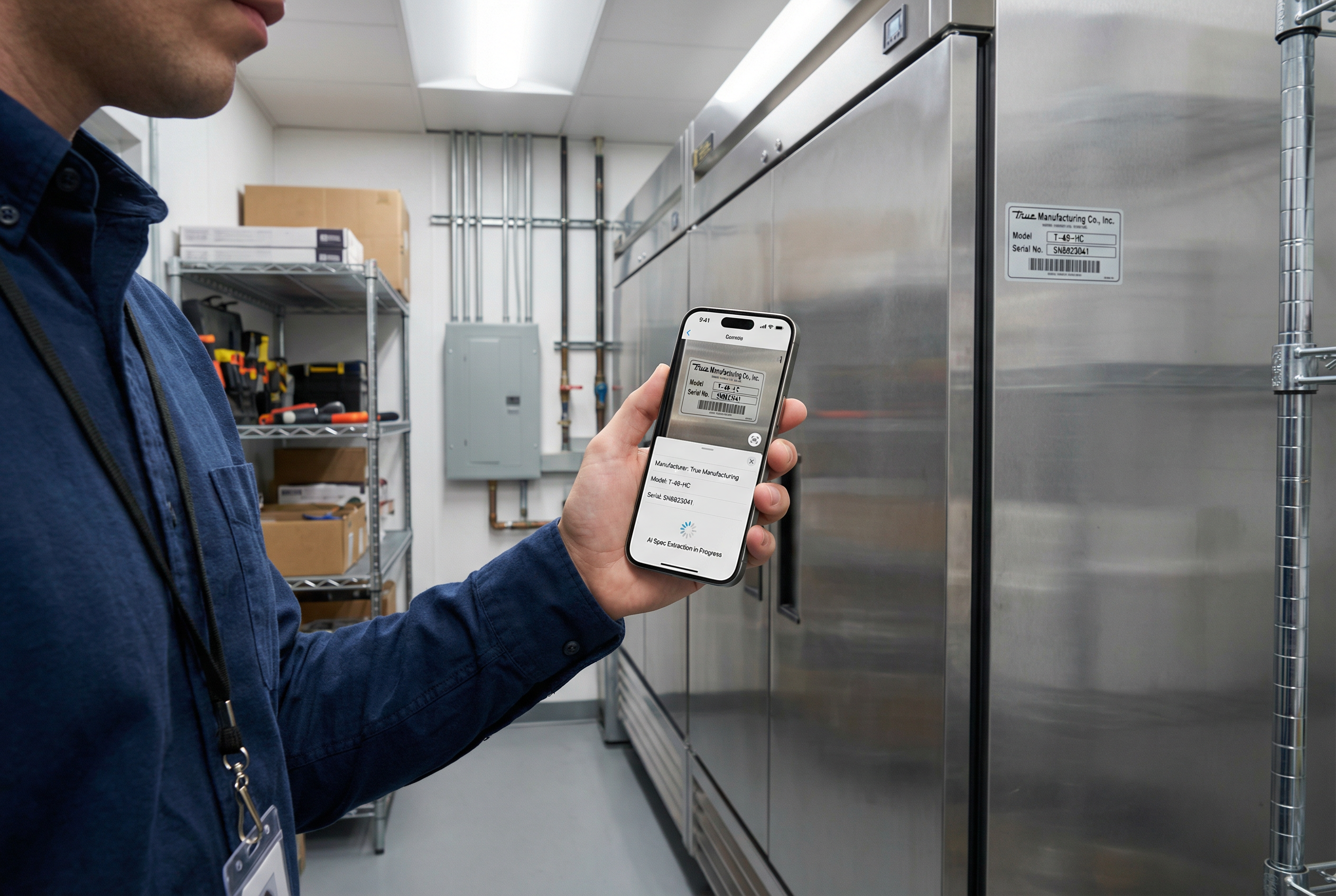
For store manager mobile asset tracking specifically, the 30-second benchmark isn't a marketing claim — it's an AI extraction outcome. When a manager photographs an equipment nameplate, Robotic Imaging's platform extracts manufacturer, model number, and serial number automatically at 85-90% accuracy. The manager confirms or corrects a pre-filled record rather than typing specifications manually. That extraction speed is what makes 30-second documentation credible at scale.
Incremental documentation matters because it solves the adoption problem that kills most asset documentation initiatives. Requiring complete store documentation before the platform has value creates a high-friction entry point. Robotic Imaging's approach makes each individual equipment record immediately useful — a scanned unit has a QR code that instantly surfaces its service history for any technician, regardless of whether the rest of the store is documented yet.
For convenience store asset management specifically, the 7-Eleven deployment demonstrates that the format works at high-transaction, high-turnover retail environments where store manager attention is continuously contested by customer-facing priorities.
Quick Mobile Photo Capture Workflow
The mobile retail asset documentation workflow operates through native iOS and Android apps — not a mobile web browser, not a responsive desktop interface accessed from a phone. This distinction matters for three specific reasons: offline performance, camera integration, and load speed.
Native apps cache 1,000+ equipment records locally, enabling full documentation capability in equipment rooms without WiFi. Retail back-of-house environments are notoriously unreliable for connectivity — concrete-block construction, distance from access points, and interference from refrigeration compressors all create dead zones where mobile web applications fail. Robotic Imaging's offline documentation capability means a store manager walks into an equipment room with zero signal and completes full asset records. When connectivity returns — at the front of the store, or when the manager returns to the office — records sync automatically.
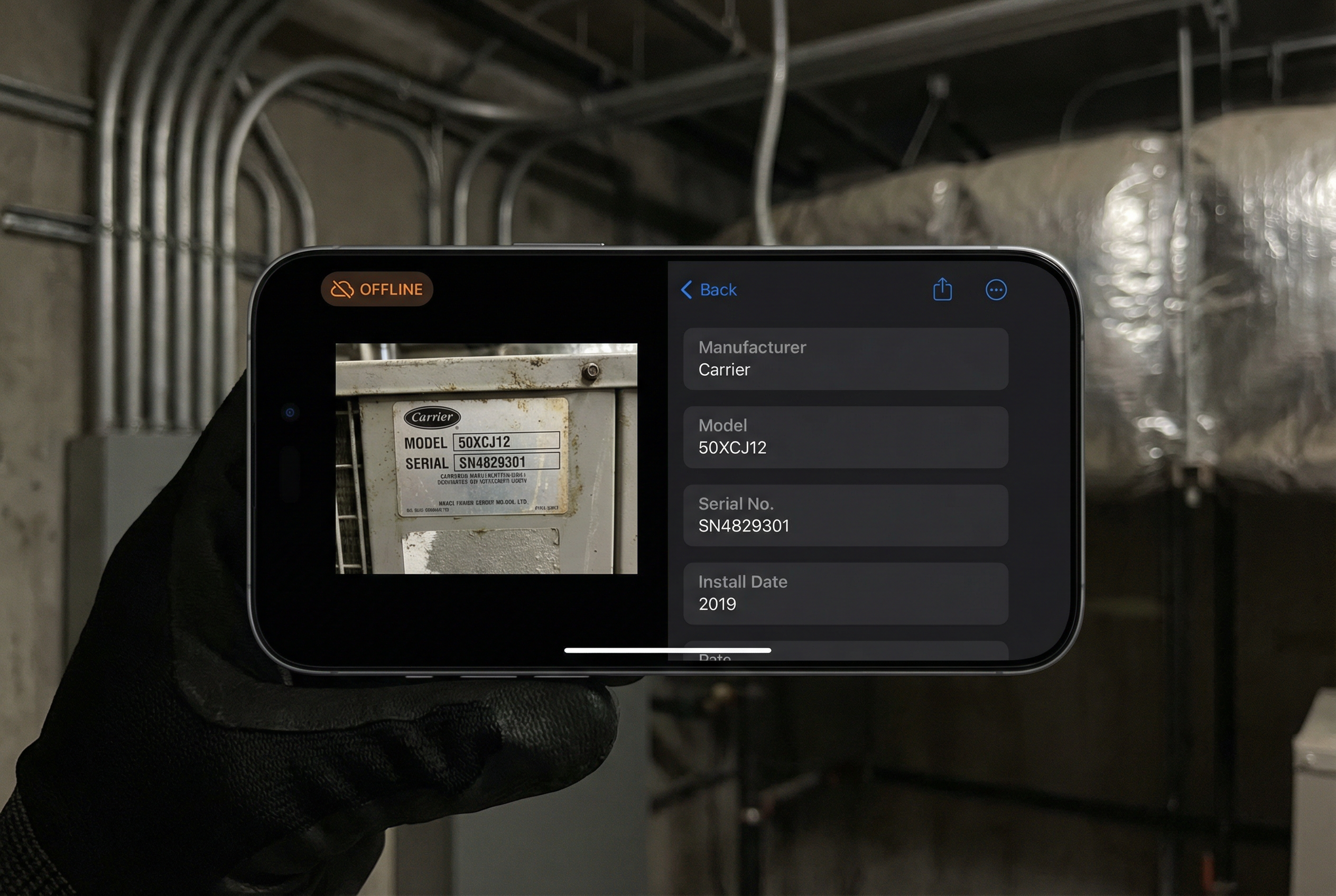
Camera integration enables the AI spec extraction workflow directly. A store manager points the iPhone or Android camera at an equipment nameplate, captures the photo within the app, and receives pre-filled manufacturer, model, and serial fields within seconds. At 85-90% extraction accuracy, most records are complete with a single confirmation tap. The AI improves through deployment — reaching 90%+ accuracy at 12 months as the model learns manufacturer nameplate formats specific to each retailer's equipment mix.
The QR code workflow completes the mobile documentation loop. QR labels cost $0.01-$0.05 per label and attach directly to each equipment unit. Once applied, any store manager, maintenance technician, or facilities auditor scans the label with the native app and accesses the complete equipment record — specifications, installation date, service history, warranty status, and pending work orders — without navigating menus or searching asset databases.
A practical example: a store manager notices a walk-in cooler door seal failing during the morning walk. They scan the QR code, review the equipment record showing the last service three months prior, photograph the damaged seal, and submit a work order with the photo attached — all from the equipment location, within 90 seconds. The submitted work order arrives at the facilities team with full equipment context pre-populated.
Equipment Prioritization for Store Operations
Retail store equipment tracking for store operations follows a different prioritization logic than facilities asset management audits. Professional auditors document comprehensively regardless of operational impact. Store managers operating Robotic Imaging's platform should sequence documentation by consequence to store operations — starting with equipment whose failure directly impacts revenue, compliance, or customer experience.
Tier 1 — Customer-Facing Revenue Equipment: Refrigeration cases, HVAC systems, lighting, and POS hardware. These units fail visibly, impact customer experience immediately, and create compliance risk for food safety temperature logs. Equipment age, service history, and condition flags on these units inform both emergency response and capital replacement planning.
Tier 2 — Revenue-Critical Back-of-House Equipment: Walk-in coolers, compressors, fuel dispensers (convenience and grocery formats), and kitchen equipment (QSR-adjacent formats). These units don't face customers but their failure creates immediate revenue loss — a walk-in cooler compressor failure in a convenience store represents thousands in product loss and days of operational disruption.
Tier 3 — Infrastructure and Support Equipment: Electrical panels, water heaters, exhaust fans, and back-of-house HVAC. These units have longer mean-time-to-impact when they degrade and support phased documentation across multiple store walks.
This tiered approach means a store manager completes the highest-value documentation in the first 1-2 walks, capturing the equipment records that most directly affect store operations decisions. Robotic Imaging's platform supports this sequencing by allowing stores to document partially — Tier 1 units documented and immediately active for QR-based work order submission — while Tier 2 and Tier 3 units complete over subsequent walks.
The operational framing matters: retail store equipment tracking in store operations isn't about comprehensive asset inventories for their own sake. It's about ensuring the equipment most likely to cause a P&L event has a documented record that enables faster service response, accurate capital forecasting, and store manager situational awareness.
Maintenance Coordination and Work Order Integration
Store-level equipment tracking creates the data foundation for faster, better-informed maintenance response. Without documented equipment records, a technician arriving for service faces an equipment identification problem before the diagnostic problem — finding the asset, verifying the model, locating previous service records. With QR code access from the equipment location, that problem disappears.
A concrete HVAC scenario: a store manager reports unusual noise from the rooftop HVAC unit. The technician arrives, scans the QR code on the condenser access panel, and immediately sees the unit's full service history — including a bearing replacement 14 months prior that the previous technician logged with notes about marginal shaft wear. The technician diagnoses a bearing failure with that context already in hand, rather than discovering it after an additional hour of diagnostic investigation. The service call is shorter, the repair more precise, and the service record updated before the technician leaves the roof.
This service history continuity is the compounding benefit of Robotic Imaging's maintenance coordination model. Each technician service log becomes the next technician's diagnostic foundation. Over two to three service cycles, equipment records accumulate the kind of institutional knowledge that previously lived only in the memory of senior technicians or long-tenure store managers.
For retail facilities managers evaluating mobile retail asset documentation platforms against professional audit programs, the maintenance coordination value is quantifiable: the 20-30% field technician productivity improvement Robotic Imaging delivers is primarily driven by pre-populated equipment context reducing diagnostic time per service visit.
The mobile work order submission workflow also closes the loop between store manager observation and technician response. Store-level equipment tracking enables store managers to submit work orders with photographic evidence and equipment context attached — reducing the back-and-forth between store operations and facilities teams that delays service scheduling.
Store-Level Equipment Visibility and Proactive Management
One of the structural failures in corporate-driven asset documentation programs is data ownership: records are collected by facilities teams, stored in facilities systems, and inaccessible to store managers when they actually need the information. A store manager calling about a refrigeration failure shouldn't have to contact corporate facilities to learn when the unit was last serviced or whether it's under warranty.
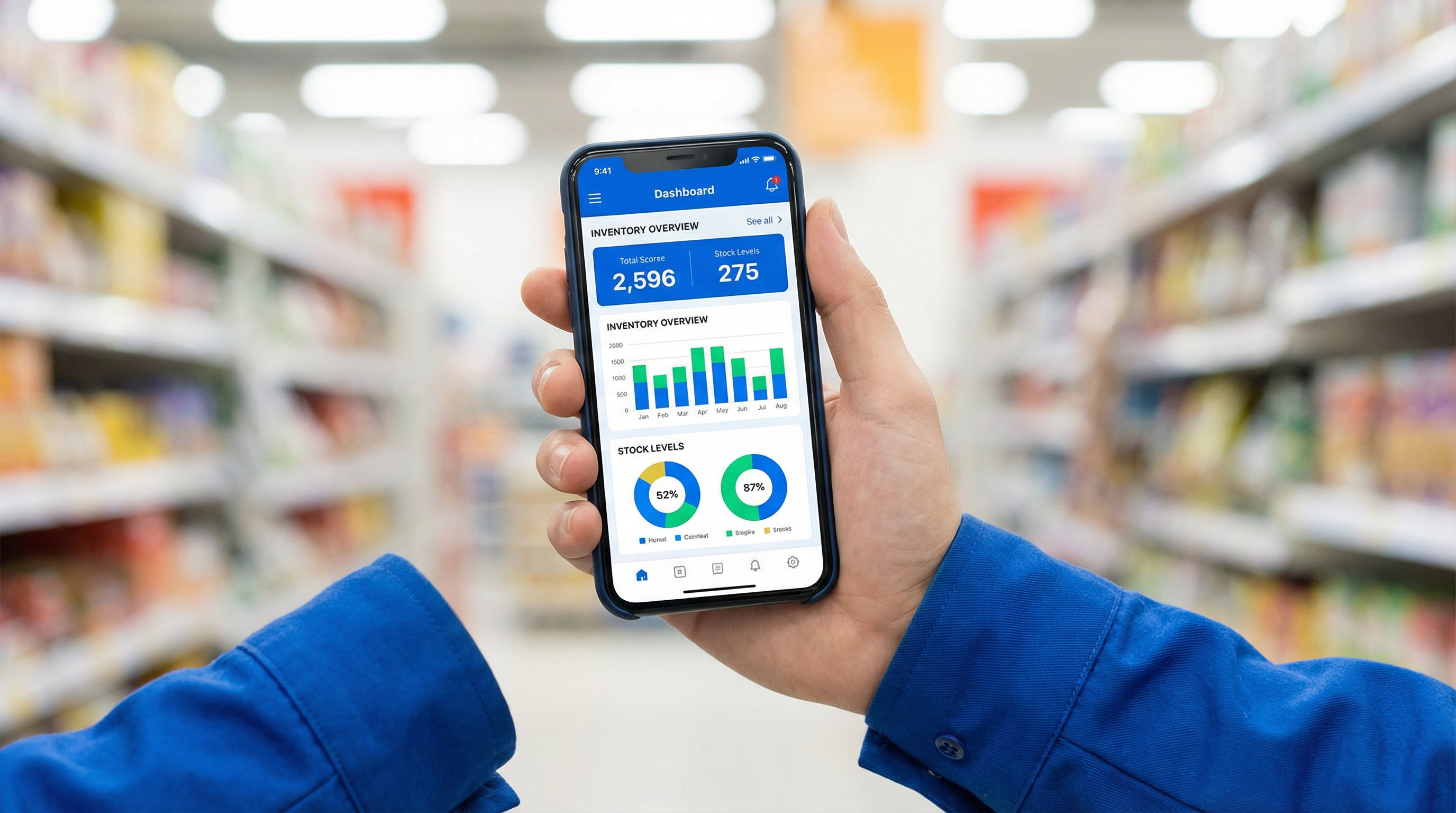
Robotic Imaging's platform gives store managers direct access to their store's equipment records through the same native app used for documentation. A store manager's dashboard shows the complete equipment inventory for their location — unit count, age distribution, maintenance history, and any open work orders — without requiring facilities team access or system permissions beyond their store scope.
This store-level visibility enables proactive management behavior that annual audit programs can't support. A store manager who can see that three of five refrigeration cases are older than 12 years can flag replacement needs during annual capital planning discussions with operational context, not just a facilities audit number. Managers with equipment intelligence participate in capital allocation conversations rather than receiving capital decisions handed down from corporate.
The ownership model also solves the continuous documentation problem. When a manager knows the records are theirs — accessible when a technician calls, useful when a piece of equipment fails, visible in their own daily dashboard — maintaining those records has immediate personal value. Documentation initiative sustainability depends on store managers experiencing direct benefit from the records they create.
Corporate Operations Oversight
The store-level data Robotic Imaging's platform generates doesn't stay at the store level. Portfolio roll-up to regional and corporate dashboards gives operations directors and facilities leadership the multi-location visibility that annual audit programs approximate with point-in-time data.
A corporate operations dashboard aggregating 500 locations shows equipment age distribution by region, maintenance frequency patterns by equipment category, and capital replacement urgency rankings across the portfolio — updated continuously as store managers document and technicians log service records, not annually when the audit vendor delivers its report.
Dollar General's planned deployment across 4,000 locations is the scale proof point for this corporate roll-up model. At that portfolio scale, the ability to identify patterns — a specific compressor model failing consistently at years 8-10, an HVAC brand underperforming in high-humidity climates — creates capital planning intelligence that individual store records can't provide. Portfolio-level retail facilities mobile platform data enables decisions about vendor contracts, equipment standards, and maintenance program investment that individual audit reports can't support.
For strategic initiatives like store remodels or brand refresh programs, current equipment age and condition data at the portfolio level eliminates the pre-project audit phase. When Robotic Imaging's platform already holds current equipment records across the portfolio, capital project scope scoping draws from live data rather than a commissioned survey.
The shared accountability model — store managers owning documentation, facilities teams owning service coordination, corporate operations owning portfolio intelligence — is what the competitive landscape uniformly fails to address. Platforms built for maintenance teams or facilities professionals create corporate-controlled data with no store-level visibility. Robotic Imaging's architecture creates records owned at the store level and aggregated upward, producing shared accountability between operations and facilities that neither team can create independently.
The Store Operations Integration Case
Retail store asset management software that requires store managers to adopt separate documentation workflows fails at adoption. The six capabilities this sub-pillar covers — daily store walk integration, 30-second AI photo capture, tiered equipment prioritization, QR-based maintenance coordination, store-level visibility, and corporate portfolio roll-up — work together because they're built around how store operations actually function, not how facilities management systems expect them to function.
For a 100-store portfolio, eliminating $5,000-$15,000 per-location professional audit fees while enabling continuous store-manager-maintained records delivers $600,000+ annual net value. That ROI case doesn't require new store manager tasks — it requires redirecting existing store walk time into 30-second documentation sequences that replace annual audit dependency.
Store managers at 7-Eleven's 1,000+ locations validate this model at the format level most relevant to convenience and specialty retail operators. Dollar General's planned 4,000-location deployment validates it at enterprise scale.
Request a Store Operations Integration Demo to see the daily store walk workflow, offline documentation capability, and corporate portfolio dashboard in a session focused on your store format and portfolio scale.
Download the Store Manager Guide for a practical walkthrough of equipment prioritization sequencing, QR code deployment logistics, and adoption frameworks for store operations teams evaluating Robotic Imaging's platform.