Why does AI need the physical world?
On No Priors on Nov. 19, Bob McGrew, OpenAI’s former research chief, now Arda’s CEO, said intelligence has become cheap and its complements are perception and action. Today, he said, “humans are the eyes and hands of the intelligence that’s in the data center” (No Priors).
He expects drones and robots of every shape to plug into the cloud. Right diagnosis.
Why is perception the bottleneck?
A model can draft a remodel plan in seconds. It cannot tell you the ceiling height in store 212 unless someone measured it.
First principles: an answer about a building is only as good as the last capture of the real site. Most building knowledge still lives in old PDFs and stale spreadsheets. If data is not living, it is dying.
Will robots replace field teams?
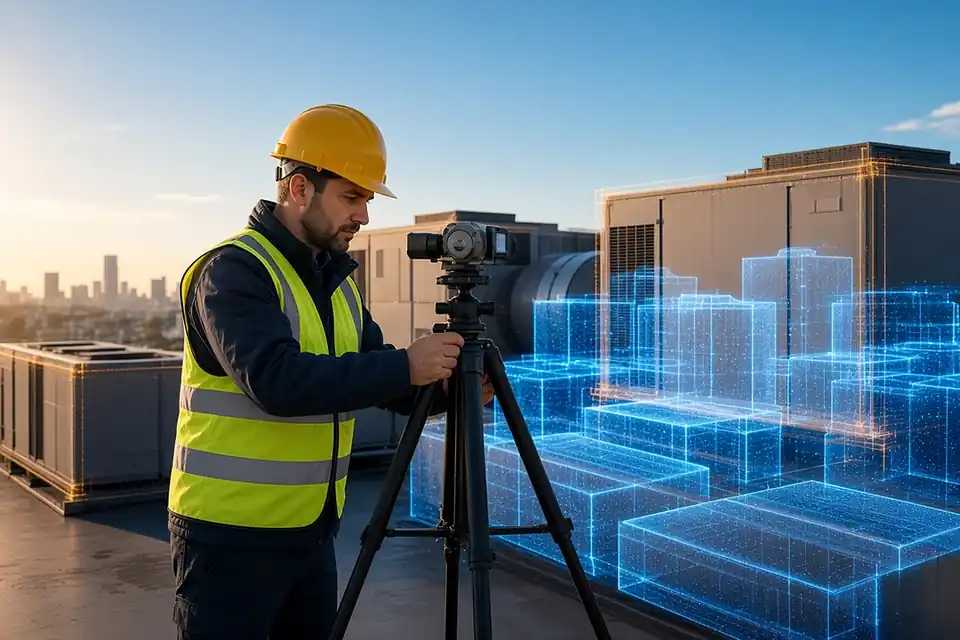
No. Capturing a whole building is a craft. A skilled technician knows where surprises hide: above the ceiling and on the roof. Field teams set ground truth, and people stay accountable for the measurement.
Phones, drones and robots extend that reach to more sites, more often, and should make field work safer, not smaller.
What should the data layer look like?
Hardware agnostic. Others are building the legs, wheels and wings. The harder problem is the shared record they all read: one measured baseline per building, updated in place, for people and machines.
Speed matters too. A capture on Monday should answer questions by Tuesday.
How does Robotic Imaging fit?
Robotic Imaging is the record of the built world: every building measured, current and easy to use. Field teams set the baseline with Managed Capture. Store teams keep it current with the RI Capture app. In roboticimaging.ai, Intelligence chat answers questions across a whole portfolio, and scan-to-BIM automation is in pilot. See the Enterprise page.
FAQ
What is ground truth for a building?
A measured capture of the real site that other records and tools are checked against.
Can AI work from old floor plans?
It can read them, but it inherits their errors. Buildings change, so answers need a current measured capture.
Do robots replace scan technicians?
No. They extend reach. Skilled field teams set the baseline and own the measurement.
Your buildings. Fully documented.
Book a captureGet The Daily Lense
New posts on existing conditions, every weekday.